Category: Kitchen Rules
Blog Posts
This space is where I share tips, guides, and resources to support the pickleball community and our Volleyer customers. The aim is simple: to make the game more enjoyable, keep your gear in top condition, and help players of all levels feel confident on and off the court.
-

Few brands have become as closely associated with carbon fibre paddles as CRBN. The company built its reputation around a simple proposition: Raw Carbon Competitive Performance Minimalist Design As pickleball evolved, CRBN quickly became a favourite among players looking for spin, control and modern paddle technology. Volleyer approaches the sport from a slightly different perspective.…
-

Babolat is one of the most respected names in racket sports. For over a century, the French brand has built equipment for players seeking performance, innovation and technical excellence. Today, Babolat offers a variety of pickleball paddles designed for different styles of play, ranging from power-focused models to control-oriented paddles. Volleyer approaches the sport from…
-

Wilson is one of the most recognisable names in racket sports. For generations, players have trusted Wilson on: More recently, Wilson has expanded its presence in pickleball with a growing range of paddles aimed at beginner, intermediate and competitive players. Wilson currently markets pickleball paddle lines including the Vesper, Blaze and Tempo families. Volleyer enters…
-

Vatic Pro has earned a reputation as one of the strongest value-focused brands in modern pickleball. The company became popular for a simple reason: High Performance Without Premium Pricing That idea resonated with competitive players looking for modern paddle technology without venturing into the highest price brackets. Volleyer approaches the market from a slightly different…
-

If you’ve spent any time researching modern pickleball paddles, you’ve almost certainly come across Six Zero. In a relatively short period of time, the brand has built a reputation for producing paddles that appeal to serious players. Their paddles are often associated with carbon fibre construction, thermoformed designs and performance-focused engineering. At the same time,…
-

HEAD is one of the most recognisable names in racket sports. Long before pickleball became mainstream, HEAD built its reputation in: As pickleball grew, HEAD naturally entered the market with a range of paddles aimed at both recreational and competitive players. Volleyer, on the other hand, arrived with a very different goal. Rather than building…
-
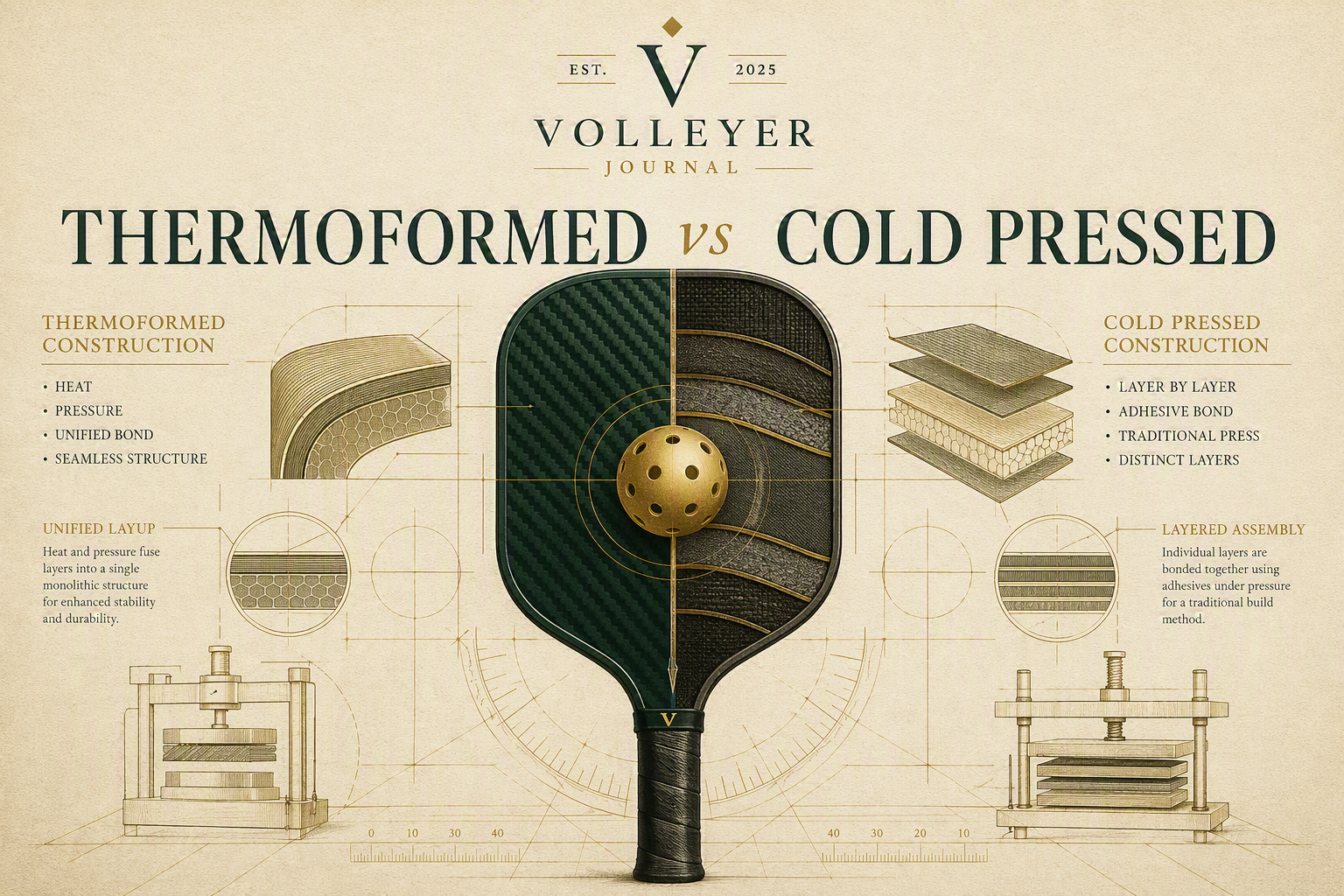
A few years ago, most pickleball players rarely discussed paddle construction. Today, it’s one of the most talked-about topics in the sport. Manufacturers increasingly describe paddles as: Thermoformed or Cold Pressed And if you’ve spent any time researching paddles online, you’ve probably been told that thermoforming changes everything. The reality is more nuanced. Construction method…
-

One of the most common questions players ask when choosing a paddle is surprisingly simple: Which paddle is right for me? The answer isn’t always: The most expensive paddle Nor is it: The newest paddle The best paddle is usually the one that suits how you play today while helping you develop into the player…
-

When players first start researching pickleball paddles, they often focus on: Yet one of the most important decisions you can make has nothing to do with materials. It’s shape. Specifically: Widebody vs Elongated At first glance the difference appears minor. In practice, the shape of a paddle influences: The best choice depends entirely on the…
-
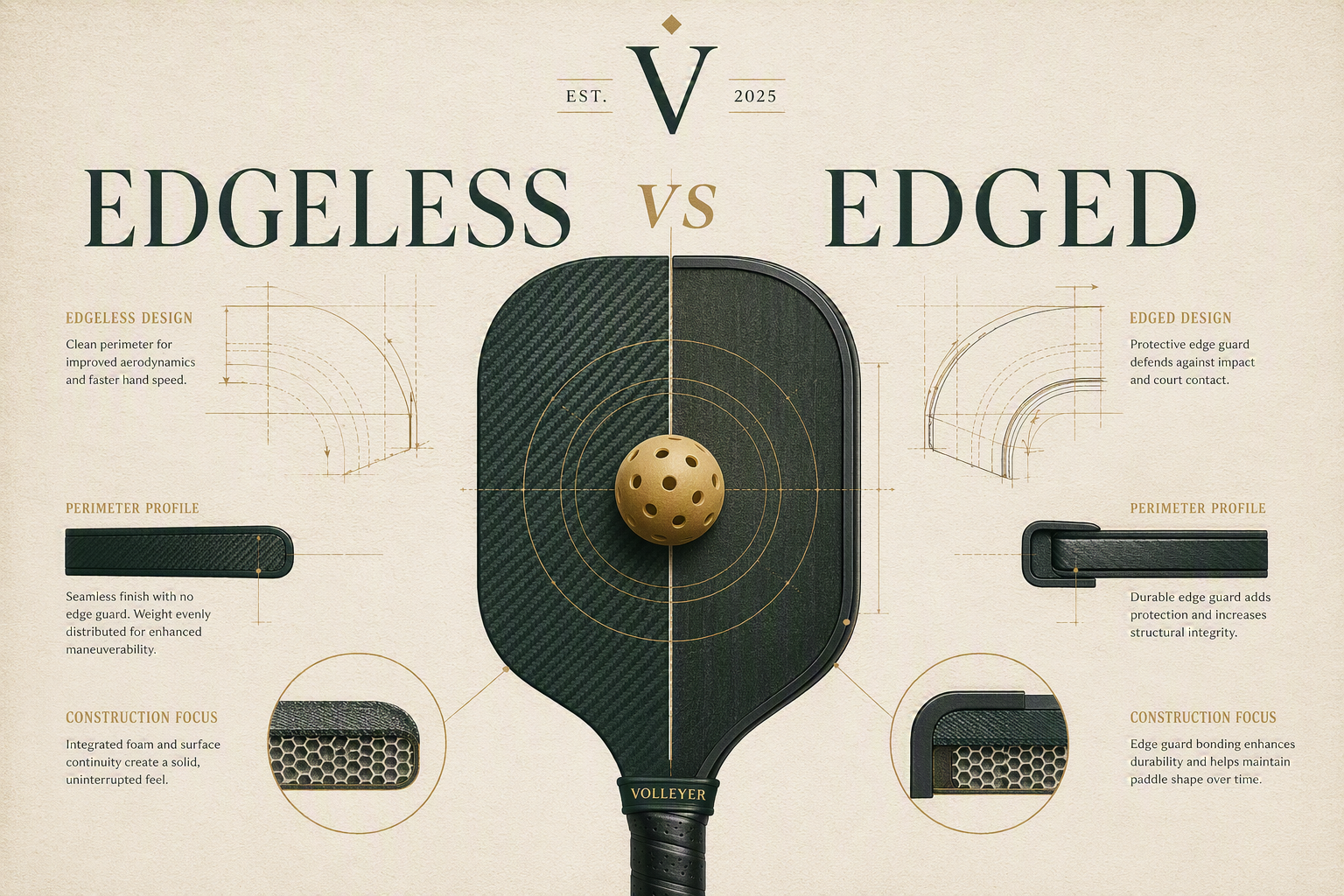
For years, almost every pickleball paddle looked broadly the same. Simple. Then manufacturers began removing the edge guard altogether. Suddenly, a new category emerged: Edgeless Paddles Supporters claimed they offered: Critics questioned whether removing the edge guard was a genuine performance innovation or simply another design trend. So who’s right? The answer depends entirely on…
-

Over the past few years, raw carbon fibre has become one of the most popular materials in pickleball. More recently, another material has started attracting attention: Kevlar Originally developed for applications requiring exceptional strength and durability, Kevlar has now found its way into paddle construction. As a result, many players are asking: Is Kevlar actually…
-

Few terms appear more frequently in modern pickleball marketing than: Raw Carbon Fibre Manufacturers mention it constantly. Reviewers talk about it endlessly. Players actively search for it. The challenge is that most people hear the term long before they understand what it actually means. Does raw carbon fibre create more spin? Does it make paddles…
-

The higher you climb in pickleball, the more important dinking becomes. Beginners often focus on serves and drives. Intermediate players discover drops and resets. Advanced players quickly learn that many rallies are ultimately decided at the kitchen line. This is where paddle selection starts to matter. The best paddle for dinking isn’t the paddle with…
-

Power attracts attention. The soft game wins matches. At higher levels of pickleball, points are often decided not by spectacular winners, but by the ability to: This is where paddle selection becomes increasingly important. The best paddle for a soft game player is rarely the paddle with the most power. Instead, it is the paddle…
-

Power has always been one of the most attractive qualities in pickleball equipment. Walk around any club and you’ll hear players discussing: It is easy to understand why. Power feels exciting. A well-struck drive can instantly shift pressure onto your opponents. A fast speed-up can end a rally before it truly begins. However, choosing a…
-

Modern paddle marketing often focuses on one thing: For many players, these terms create more confusion than clarity. The truth is that surface material can influence how a paddle feels and performs, but it is only one part of a much bigger picture. A carbon fibre paddle will not automatically improve your game. A fibreglass…
-
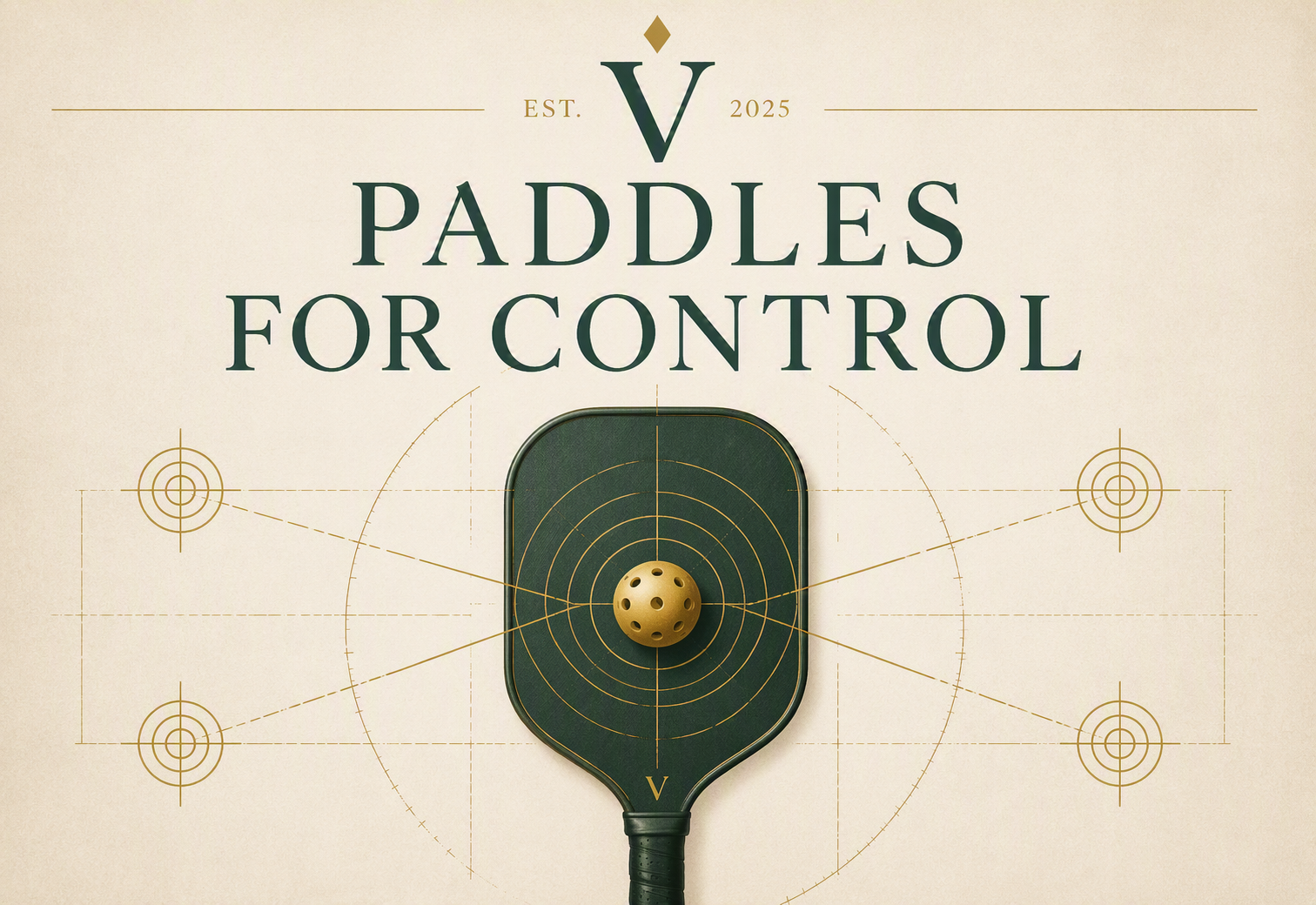
Walk around a local pickleball club and most conversations about paddles revolve around power. Which paddle hits hardest? Which paddle creates the most spin? Which paddle feels explosive off the face? Yet ask experienced players what wins matches consistently, and many will give the same answer: Control. Control helps players: For many players, especially in…
-
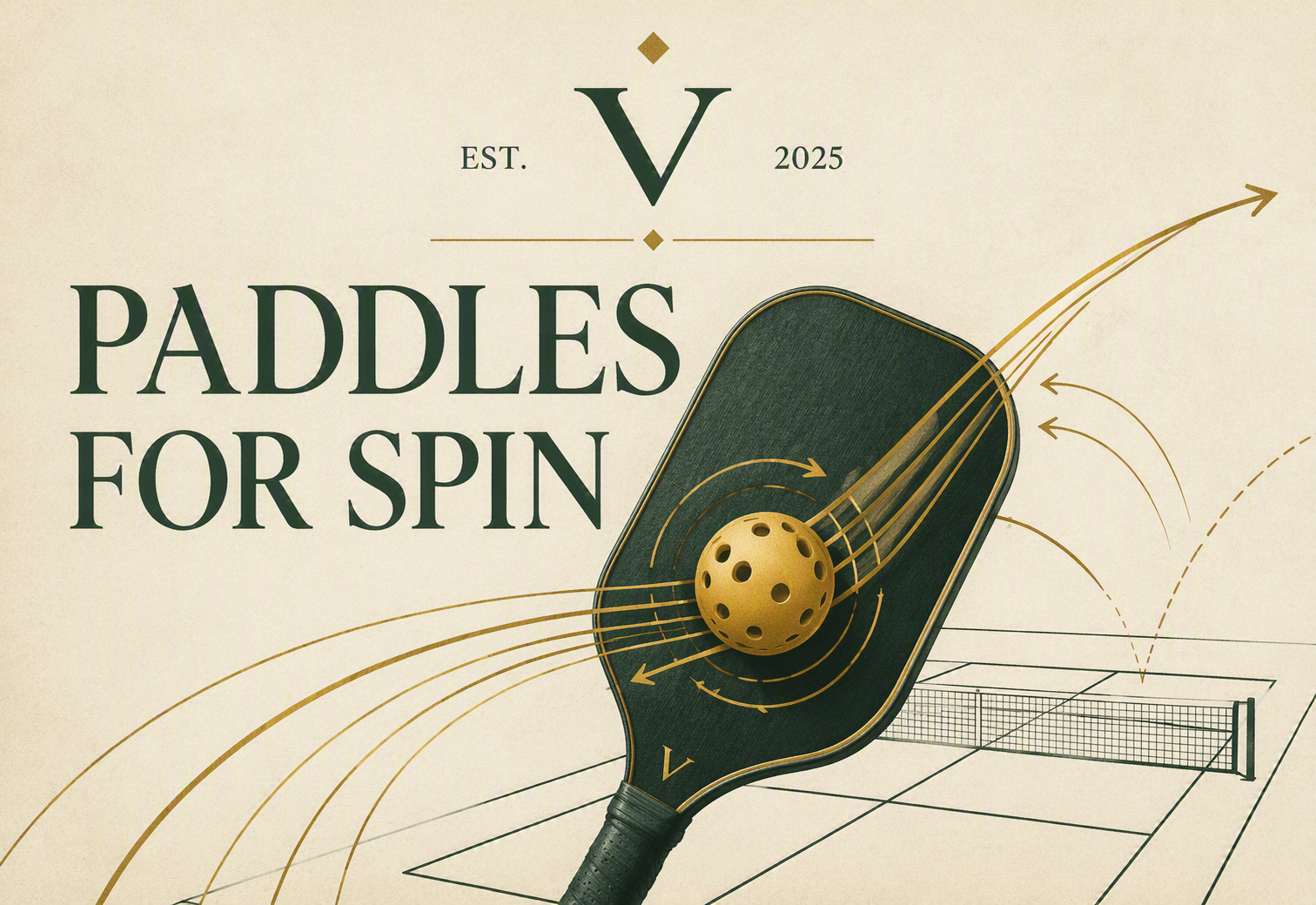
Few topics generate more discussion in modern pickleball than spin. Players increasingly use: to create more challenging trajectories and uncomfortable bounce patterns. As interest in spin has grown, manufacturers have responded by producing paddles specifically designed to enhance spin generation. The challenge is understanding what actually influences spin and what simply sounds good in marketing…
-

One of the biggest mistakes pickleball players make is choosing a paddle before understanding how they actually play. When shopping for equipment, most players focus on specifications: While these characteristics matter, they don’t tell the complete story. The same paddle can feel incredible for one player and completely wrong for another. Why? Because different styles…
-

Tournament pickleball places unique demands on both players and equipment. A paddle that feels fantastic during a relaxed club session may feel very different six matches into a long tournament day. Fatigue accumulates. Conditions change. Nerves appear. Opponents become stronger. At that point, consistency often matters more than raw performance. The best tournament paddles are…
-

At advanced level, paddle selection becomes a very different conversation. Beginners typically need forgiveness. Intermediate players need balance. Advanced players are searching for something else entirely: Marginal Gains The difference between a good paddle and a great paddle is rarely dramatic. Instead, advanced players look for subtle performance advantages that complement an already well-developed game.…
-

There comes a point in every player’s pickleball journey when a beginner paddle no longer feels quite right. You’re making more consistent contact. Kitchen rallies last longer. You’re beginning to recognise the difference between a drop shot and a drive. You may even be experimenting with topspin, resets and tactical shot selection. At this stage,…
-

Entering the world of pickleball can feel deceptively simple. The rules are easy to learn, rallies develop quickly and most new players find themselves enjoying the game within a single session. Choosing a paddle, however, is often far more confusing. A quick search reveals hundreds of options, all claiming to offer more power, more spin…
-

Choosing a pickleball paddle has never been more complicated. A few years ago, selecting a paddle was largely a matter of choosing a comfortable grip and deciding how much weight you preferred. Today, players are faced with carbon fibre surfaces, thermoformed constructions, foam-enhanced cores, textured faces, elongated shapes and countless marketing claims promising more spin,…
-
As DUPR becomes increasingly embedded within pickleball, more players are discovering that tournament participation and ratings are becoming closely connected. Many modern events use DUPR for: As a result, one question appears repeatedly: “How do I link my DUPR to tournaments?” The good news is that the process is usually straightforward. The more important question…
-

One of the biggest misconceptions surrounding DUPR is that only tournament matches count towards your rating. Many newer players assume they need to enter organised competitions before they can build a meaningful DUPR profile. The reality is often much simpler. In many cases, recreational matches can contribute towards your DUPR rating, which is one reason…
-

One of the most common questions new players ask after receiving their first DUPR rating is: “How many matches do I actually need before my rating becomes reliable?” It’s an important question. Many new players receive a rating and immediately wonder whether the number accurately reflects their level. Others notice their DUPR changing dramatically after…
-

At some point in every competitive pickleball player’s journey, a question appears: “How do I actually get a DUPR rating?” You may have heard other players discussing ratings, seen tournament divisions organised by DUPR or noticed club sessions referencing player levels. The challenge is that if you’re brand new to the system, it can feel…
-

Most pickleball strategy assumes perfect conditions. The court is calm. The ball behaves predictably. Positioning decisions are based entirely on opponents and shot selection. Outdoor pickleball rarely offers that luxury. Wind changes everything. Suddenly serves drift, lobs become unpredictable, drop shots float long and defensive recoveries feel far more difficult. Players who ignore the wind…
-

One of the biggest tactical mistakes in pickleball is attacking too soon. The second biggest is never attacking at all. Strong pickleball players understand that dinking is not the objective. Dinking is the process that creates the opportunity to attack. Watch advanced players and you’ll notice something interesting. They are rarely trying to win points…
-
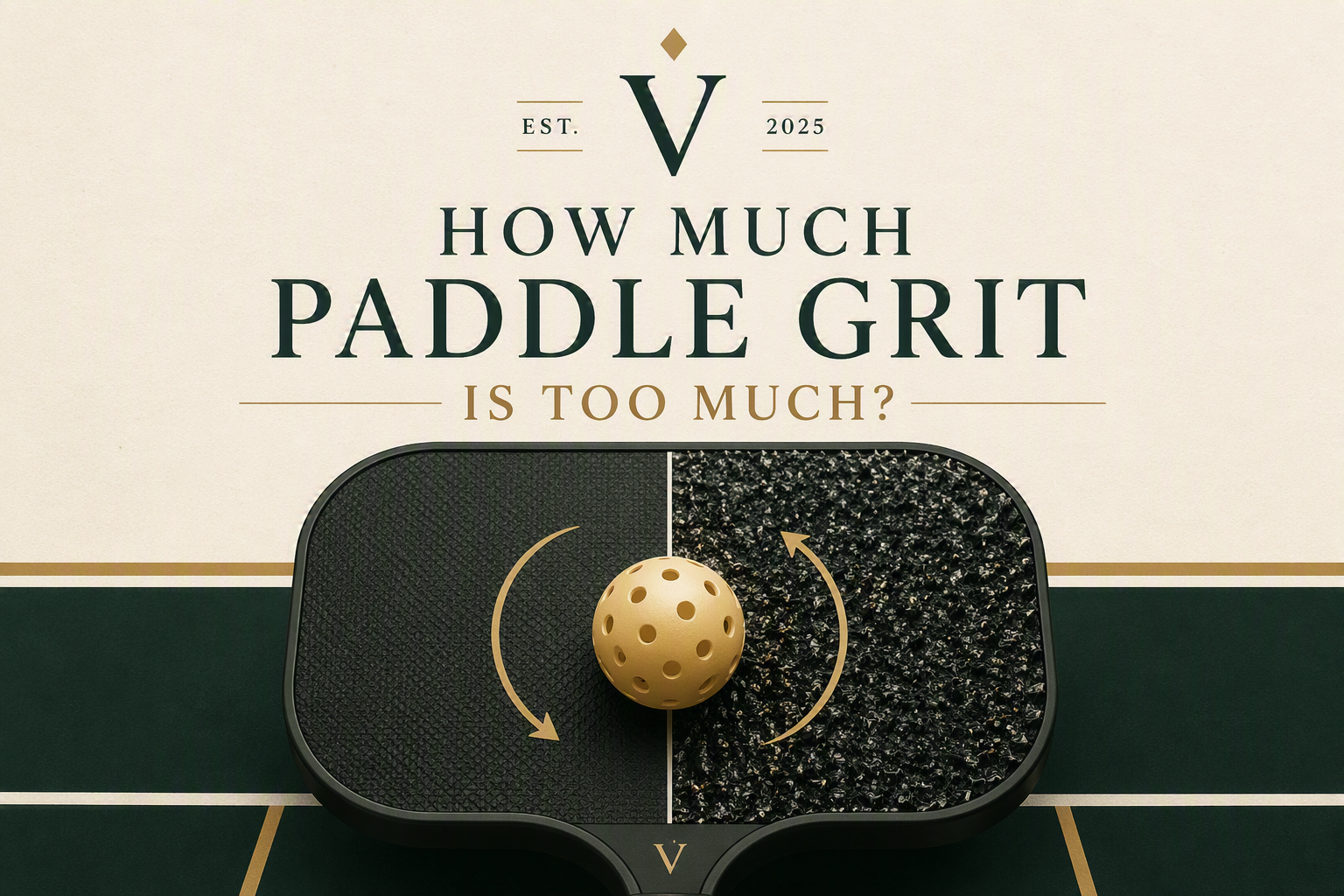
Few areas of modern pickleball generate more debate than paddle grit. As manufacturers continue searching for ways to improve spin performance, textured paddle faces have become one of the most important features in today’s equipment market. Terms such as raw carbon fibre, textured surface, gritty face and spin-enhancing technology now appear on countless paddle descriptions.…
-

Spin has become one of the defining battlegrounds in modern pickleball. Few skills create more discussion, and few areas of equipment innovation have developed as rapidly. Manufacturers continue searching for ways to increase grip, improve ball interaction and help players generate greater spin. However, there is an important distinction every player should understand: Not every…
-

Most players believe successful kitchen play is about soft hands. In reality, good dinking often starts with good feet. Watch advanced pickleball closely and you’ll notice something interesting. The best players rarely make dramatic movements. Instead, they make dozens of small adjustments throughout every rally. They stay balanced, recover after each shot and consistently arrive…
-

If there is one area of pickleball that separates developing players from advanced players, it is the kitchen. Most recreational players spend too much time practising power and not enough time developing control. Yet as players improve, matches become increasingly influenced by dinking, positioning and decision-making near the non-volley zone. This is why kitchen drills…
-

Many doubles teams lose points before the ball is even struck. Not because of poor technique. Not because of weak strategy. But because the space between partners is wrong. Stand too close together and you leave the sidelines exposed. Stand too far apart and opponents attack the middle with ease. Finding the right spacing allows…