Spin is one of the defining elements of modern pickleball. From carving a slice return to rolling a topspin drive or bending a sidespin dink, spin changes the trajectory of the ball, dictates rally tempo, and forces opponents into mistakes. It is not just about flair but about control, pressure, and strategy.
However, the impact of spin varies greatly between doubles and singles. In doubles, where quick exchanges at the kitchen dominate, spin is often used to create awkward bounce angles and disrupt opponents’ timing. In singles, with more open court and longer rallies, spin becomes a weapon for dictating pace, depth, and consistency.
For UK players, mastering these nuances is vital. Indoor sessions in Manchester, fast-paced club play in London, or windy outdoor singles matches in Brighton all demand different approaches to spin. Choosing the right shot, combined with the right paddle and footwork, can give you the edge.
This guide explores how spin strategies differ between doubles and singles, with practical tips, UK-specific examples, and training drills. By the end, you will know when and how to apply topspin, slice, and sidespin effectively, and how to adapt your approach whether you are holding the line in doubles or grinding through singles points.
Why Spin Matters in Both Formats
Before breaking down the differences between doubles and singles, it is worth understanding why spin is such a powerful tool in pickleball.
Topspin brings the ball down sharply, allowing you to swing harder while still keeping the shot inside the lines. It is especially useful for passing shots or driving through windy outdoor conditions.

Slice and backspin keep the ball low after the bounce, forcing opponents to lift their return and giving you the chance to control the rally’s tempo. A well-placed slice can neutralise power hitters and buy you time to reset.
Sidespin adds deception and unpredictability. By curving the ball off its natural path, it disrupts timing and positioning, often pulling opponents wide or causing mishits at the kitchen line.
In every format, spin creates opportunities. The difference lies in how those opportunities are applied. Doubles rewards patient setup play, where spin is used to move opponents and build openings. Singles rewards aggression and precision, where spin helps you finish points and control space more directly.
Spin in Doubles: Control, Patience, and Setup
Doubles is the most popular format in UK pickleball clubs, from recreational sessions in Manchester to competitive leagues in London. Because the court is shared with a partner, rallies tend to be longer and more tactical. Spin is therefore less about blasting winners and more about controlling tempo, creating openings, and setting up your partner for success.
Key Roles of Spin in Doubles
Creating Effective Drops
The drop shot is the backbone of doubles strategy, and spin makes it far more effective. When hitting a slice or backspin drop:
- Grip and Paddle Angle: Use a continental or slightly eastern backhand grip, keeping the paddle face open and brushing under the ball. This generates underspin, which keeps the ball low after the bounce.
- Trajectory Control: Aim for a high arc that lands just beyond the net. The underspin slows the ball on contact, forcing opponents to lift rather than attack.
- UK Advantage: On slower indoor courts common in places like Manchester or Glasgow, the softer bounce means slice drops bite more, giving you extra margin for error while still keeping the ball unattackable. Outdoors in windier UK conditions, focus on compact swings to maintain control.
Dinking with Variation
At the kitchen line, dinks are not just about consistency but also about disguise and variation. Spin makes each dink more unpredictable:
- Backspin Dinks: Keep the wrist firm and gently push under the ball. These stay low and force opponents to lift, setting up attackable balls.
- Topspin Dinks: Roll the paddle face over the ball with a brushing motion, especially useful for pushing opponents off the line or creating depth under pressure.
- Sidespin Dinks: Brush across the ball (right-to-left or left-to-right) so it curves wide after the bounce. This pulls opponents off the court and creates gaps in the middle for your partner.
- UK Tip: In crowded club sessions, sidespin dinks are especially disruptive because many recreational players struggle to read the curve or adjust their paddle angle quickly.

Neutralising Power
Aggressive drives are increasingly common, especially as tennis players transition into UK pickleball. Spin is a reliable way to take the pace off and reset control:
- Backspin Returns: Meet the ball early with a compact stroke, slicing under to reduce speed and add control. This forces opponents into longer rallies rather than easy put-aways.
- Defensive Blocks: Adding a touch of underspin on blocks keeps them low and makes counters harder.
- UK Context: On faster outdoor surfaces (such as tarmac courts adapted for pickleball), these resets are crucial because the ball skids through more quickly. Spin helps you slow the rally and regain neutral positioning.
Setting Up Partners
In doubles, spin is rarely about hitting outright winners but about creating attackable opportunities for your partner:
- UK Application: In league matches or tournaments like the English Open, where players are more organised, coordinated spin use between partners is often the difference between simply staying in a rally and actively building winning opportunities.
- Slice Setups: A low, skidding slice return gives your partner time to advance and take the offensive at the kitchen.
- Topspin Rolls: Brushing over the ball creates dipping shots that bounce up into opponents’ strike zones awkwardly, often producing a pop-up your partner can finish.
- Combination Play: One effective doubles pattern is alternating slice drops with topspin rolls. The contrast disrupts opponents’ rhythm and makes it harder for them to anticipate who will take the next ball.
Common Doubles Mistakes with Spin
Overhitting Topspin Drives
Many players try to finish rallies too early with aggressive topspin drives. While topspin brings the ball down, swinging too hard often results in unforced errors or easy high volleys for opponents to counter.
- Why It Happens: Tennis converts often rely on heavy forehands rather than adjusting to pickleball’s smaller court and faster exchanges.
- Better Alternative: Use topspin drives sparingly as setup shots, mixing them with controlled slice drops. Aim to dip the ball at opponents’ feet rather than blasting through them.
- UK Tip: On slower indoor courts in Birmingham or Leeds, topspin drives lose pace anyway, making placement and consistency far more effective than brute force.
Relying on Flashy Spin Serves
Some players overuse sidespin or heavy kick serves in social doubles, hoping to win quick points. While these may look impressive, they rarely create lasting advantages against experienced opponents and can lead to faults if mistimed.

- Why It Happens: Players get caught up in highlight shots instead of focusing on fundamentals.
- Better Alternative: Prioritise depth and consistency on serves, aiming for the back third of the court. This sets up the rally far more reliably than risky spins.
- UK Tip: In club sessions across London and Manchester, deep, consistent serves do more damage than trick serves, especially as indoor ceilings and side walls can disrupt exaggerated spins.
Ignoring Partner Positioning
Spin is often used in isolation, without considering how it affects your teammate’s positioning. For example, hitting a wide sidespin dink when your partner is slow to cover the middle can leave you exposed.
- Why It Happens: Players focus too much on their own shot quality and forget that doubles is about coordination.
- Better Alternative: Use spin to set up shots that help your partner, such as a low slice return that gives them time to step into the kitchen, or a dipping topspin roll that forces a pop-up for them to attack.
- UK Tip: In competitive doubles leagues, communication is key. Using pre-agreed signals (open hand to switch, closed fist to stay) ensures your spin shots and your partner’s movements stay aligned.
Doubles Spin Checklist
Before hitting a spin shot, ask yourself:
- Does this shot give me margin for error?
- Does it set up my partner or leave them exposed?
- Does it reduce my opponents’ attacking options?
- Am I varying spin, or repeating the same shot predictably?
Spin in Singles: Aggression, Passing, and Finishing
Singles pickleball places a premium on covering the full court alone. With more open space to hit into, spin is often used offensively to create winners or force errors. Compared to doubles, rallies are shorter and more physically demanding, which means spin becomes a weapon rather than just a tool for control.
Building Aggressive Groundstrokes
In singles, baseline play dictates momentum, and topspin is the cornerstone of consistent aggression. A heavy topspin forehand or backhand allows you to swing fast, add pace, and still keep the ball dipping inside the court. It pushes opponents deep, opening up space for drop shots or net approaches.
- Technical Breakdown:
- Use a low-to-high swing path with the paddle face slightly closed.
- Contact the ball out in front of your body to maximise topspin and accuracy.
- Engage legs and core to drive upward through the shot — spin comes from the whole kinetic chain, not just the wrist.
- Tactical Application: Follow a deep, heavy topspin shot with a transition move to the kitchen, using the extra recovery time spin provides.
- UK Context: On breezy outdoor courts in Brighton or coastal towns, topspin stabilises flight against gusts and helps prevent balls from floating long. Indoors (e.g., Birmingham sports halls), the controlled dip of topspin makes it easier to hit confidently on faster floors.

Using Slice for Defence and Variety
The slice (backspin) is far more than a “defensive bailout” in singles. A biting slice stays low, reducing your opponent’s strike zone and forcing them to lift the ball. It’s also a rhythm disruptor when alternated with topspin drives.
- Technical Breakdown:
- Open the paddle face to around 10–15° upward angle.
- Use a descending swing path with stable wrist and firm grip pressure.
- Keep the follow-through compact and level to produce a skidding trajectory.
- Tactical Application: Deploy deep slices cross-court to change tempo, or float neutral slices down the line to force awkward footwork. Mix slices with topspin drives to break predictable rally patterns.
- UK Context: On slower indoor courts in Manchester or Leeds, slices grip more effectively, exaggerating their “skid.” Outdoors in damp conditions (e.g., Glasgow), slice is a safer rallying option when the ball feels heavier and harder to accelerate.
Controlling Passing Shots and Lobs
Singles players must finish points decisively, and spin makes passing shots and lobs far more reliable under pressure. Topspin passing shots dip quickly, while slice or underspin lobs disguise intentions and can flip defence into attack.
- Technical Breakdown:
- Passing Shots: Aim cross-court with topspin — the longer diagonal gives more clearance and margin. Accelerate the paddle through contact to add both pace and spin.
- Lobs: For a topspin lob, brush sharply up the back of the ball with a steep swing path; for a slice lob, undercut the ball to add float and disguise.
- Tactical Application: Alternate dipping topspin passes with lofted lobs to keep opponents off balance at the net. Use spin variation to disguise intent until the last second.
- UK Context: On damp or cool outdoor courts (Glasgow, Newcastle), topspin ensures lobs drop sharply instead of sailing long. Indoors, where ceilings can be low, mastering the dipping topspin pass is often more practical than high lobs.
Managing Court Coverage with Spin
Singles is physically demanding, and spin can act as a time-management tool — either slowing rallies for recovery or accelerating them to shorten points.
- Technical Breakdown:
- For defensive resets, prioritise depth and spin control over pace. A deep slice with medium pace buys you steps to recover.
- For attacking drives, use aggressive topspin to push opponents back and create finishing chances.
- Paddle angle and grip pressure are critical — lighten grip slightly for slice resets, firm up for topspin drives.
- Tactical Application: Use slice when stretched wide to float the ball back deep and regain positioning. Use topspin aggressively when you’re balanced and inside the baseline.
- UK Context: On crowded community courts where singles is sometimes played in shortened formats, spin-based control helps sustain rallies without excessive physical demand, especially in league or ladder play.
Common Singles Mistakes with Spin
Overusing Topspin Drives
Singles players often lean too heavily on topspin forehands, trying to hit winners from the baseline. While topspin adds safety, overhitting usually results in unforced errors or short balls that invite counterattacks.
- Why It Happens: Tennis converts bring their big forehand game into pickleball without adjusting to the smaller court.
- Better Alternative: Use topspin as a tool to push opponents back and open the court, then finish with a controlled volley or passing shot.
- UK Tip: On breezy outdoor courts in Brighton or Cardiff, heavy topspin stabilises the ball’s flight, but consistency should take priority over power.

Neglecting the Slice
Some players avoid slice entirely, viewing it as purely defensive. In singles, this is a mistake: slice keeps the ball low, slows rallies, and forces opponents into uncomfortable upward swings.
- Why It Happens: Players believe aggression must always come from topspin.
- Better Alternative: Mix slice with topspin to disrupt rhythm. For example, follow a deep slice approach shot by moving forward to the kitchen for a volley.
- UK Tip: On indoor wood or synthetic courts in Manchester and Leeds, slice “grabs” more, making it a perfect reset option.
Telegraphing Spin Shots
Singles players sometimes signal their intentions too clearly, such as winding up big for a topspin drive or changing grip too obviously for a slice. This allows opponents to anticipate and counter.
- Why It Happens: Inconsistent technique and lack of disguise.
- Better Alternative: Keep a consistent paddle preparation, changing only at the last second whether hitting topspin, slice, or flat.
- UK Tip: Practise with mirrors or video at local clubs to refine disguise — a valuable tool in competitive play.
Failing to Adjust Spin to Court Conditions
Spin behaves differently depending on the surface and environment. Ignoring these factors leads to poor shot selection. For instance, a topspin lob that works in dry Arizona may sail long in damp Southampton conditions.
- Why It Happens: Players copy pro tactics without adapting to local conditions.
- Better Alternative: Adjust spin use based on ball response. In damp weather, favour slice and controlled drives; in dry, warm venues, use topspin more aggressively.
- UK Tip: On wet courts, grip-enhancing paddles such as carbon fibre models help maintain spin control (see our paddle guide).
Singles Spin Checklist
Before hitting a spin shot in singles, ask:
- Am I using this spin to control space or just swinging for a winner?
- Does the shot give me time to recover my court position?
- Am I varying spin to disrupt rhythm, or repeating the same shot predictably?
- Have I adjusted for local court and weather conditions?
Comparing Doubles and Singles Spin Strategies
| Aspect | Doubles | Singles |
|---|---|---|
| Primary Role of Spin | Control and setup. Spin is used to keep the ball low, slow the rally, and create opportunities for your partner. | Aggression and finishing. Spin enables players to hit harder, disguise shots, and manage court coverage alone. |
| Topspin | Used sparingly. Topspin dinks and roll shots are tools for applying pressure but rarely outright winners. Overuse often leads to easy volleys. | Main offensive weapon. Heavy topspin drives allow pace + safety, pushing opponents back and setting up passing shots or net approaches. |
| Slice / Backspin | Critical for drops and returns. A skidding slice drop helps teams advance to the kitchen. Also used to neutralise power and reset. | Defensive + tactical. A deep slice slows rallies, buys recovery time, and breaks opponent rhythm. Effective when alternated with topspin. |
| Sidespin | Common at the kitchen. Sidespin dinks pull opponents wide and open the middle for partner finishes. | Less frequent, but useful for sharp cross-court passing shots or wide serves to drag opponent off court. |
| Shot Setup | Spin sets up partners: e.g., low slice creates time for your teammate to attack. | Spin sets up self: topspin opens space for approaches, slice extends rallies until you can counter-attack. |
| Common Errors | Overhitting topspin drives, flashy spin serves, forgetting to coordinate spin with partner’s position. | Overreliance on slice (becoming too passive), hitting topspin too flat in windy outdoor conditions, failing to disguise spin variations. |
| Technical Focus | – Compact swings for control. – Paddle face stability critical at the kitchen. – Soft grip adjustments enhance touch. | – Full low-to-high swing path for topspin. – Firm slice mechanics with open face. – Greater reliance on footwork to position body for clean contact. |
| Tactical Focus | – Patience and building pressure. – Use spin to control tempo and funnel rallies into attackable balls for your partner. | – Aggression and deception. – Use spin to create space, force errors, and manage longer recovery runs. |
Drills for UK Players
Doubles Spin Drill: Slice Drop Progression
- Stand on the baseline and practise hitting slice drops into the kitchen.
- After 10 successful shots, move forward step by step until you reach the non-volley zone.
- Focus on keeping the ball low and forcing your opponent to lift.
Singles Spin Drill: Topspin Passing Shots
- With a partner at the net, practise rolling heavy topspin forehands cross-court and down the line.
- Aim for dip and margin, not sheer power.
- Repeat 20 times on each side, alternating placement.
Club Drill for Both Formats: Spin Serve Accuracy
- Place targets in the service box (cones or markers).
- Hit 20 serves using slice and 20 with topspin.
- Record accuracy and spin effect, aiming for 70 percent success.
If you want to see more drills with greater detail, see our top 10 spin drills.
Equipment and Spin
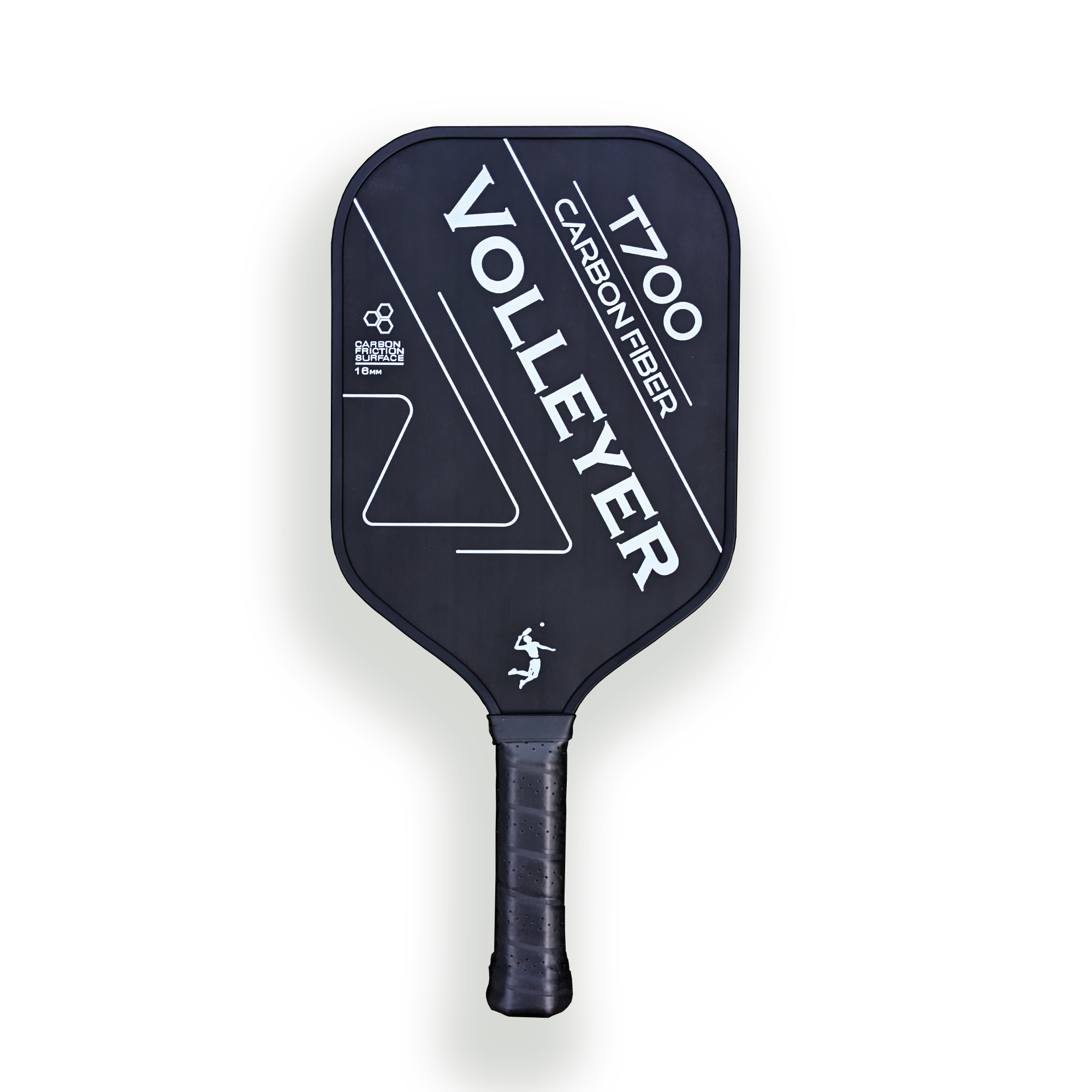
Spin performance depends not only on technique but also on the paddle you use. Paddles with raw carbon fibre surfaces, such as the Volleyer T700, are particularly effective because the gritty texture helps generate consistent topspin, slice, and sidespin. Unlike painted or coated paddles, raw carbon fibre retains its texture over time, which is especially useful on outdoor UK courts where surfaces and balls can wear down equipment more quickly.
For players looking to add more spin to their game, choosing a paddle with a durable, textured surface ensures you can rely on your shots across long practice sessions and competitive play.

Conclusion
Spin is a defining element of pickleball, shaping rallies in both doubles and singles. In doubles, it works best as a tool for patience, control, and partner setup. In singles, it becomes a weapon for aggression, disguise, and finishing points.
For UK players, developing both approaches will make you adaptable and competitive across formats. Practise with intention, avoid common pitfalls, and use equipment that supports your style of play. With the right blend of technique and paddle choice, your spin won’t just look sharp. It will help you secure more points, whether you’re battling through rallies in Manchester, competing in London leagues, or enjoying singles matches in Cardiff or Edinburgh.