Spin is one of the most effective tools in pickleball. A well-timed topspin drive, a skidding slice return, or a curling sidespin dink can completely change the pace of a rally and put your opponent on the back foot. Yet spin is not something that comes naturally. It requires practice, repetition, and the right equipment.
For UK players, spin practice can be challenging. Weather often limits outdoor play, and many leisure centres have busy court schedules. That is why having a set of structured drills, including solo options, is essential. This guide outlines ten of the best drills for improving your topspin, slice, and sidespin, with options for both pairs and individuals.
1. Topspin Drive Brush-Up Drill
Goal: Develop consistent topspin for baseline drives.
How to do it:
- Stand behind the baseline with a basket of balls.
- Focus on brushing up the back of the ball with a low-to-high paddle swing.
- Aim deep in the court, letting the ball dip before landing.
- Repeat 20–30 drives, alternating cross-court and down the line.
UK tip: Indoors at London or Leeds centres, the even bounce makes it easier to feel the kick of the ball. Outdoors in Cardiff, damp conditions may reduce spin, so exaggerate your brushing motion.
2. Slice Return Drill
Goal: Learn to keep returns low and skidding.
How to do it:
- Partner serves from the baseline.
- Step forward and cut across the back of the ball with a downward brushing motion.
- Focus on keeping the ball below net height.
- Alternate targeting opponent’s forehand and backhand sides.
Why it matters: A slice return forces opponents to hit upward, often creating weak third shots.
3. Spin Serve Target Practice
Goal: Build variety in your serve with legal topspin and slice.
How to do it:
- Place three cones in the opposite service box: wide, centre, and deep.
- Practise hitting 10 topspin serves to each target.
- Repeat with slice serves, brushing across the ball.
- Track accuracy out of 30 attempts.
UK tip: At competitive clubs in Manchester and Bristol, mixing spin serves keeps returners guessing. See our Best Spin Serves for UK Players guide for detailed tutorials.
4. Sidespin Dink Drill
Goal: Add curl and deception to your dinks.
How to do it:
- Stand at the kitchen line with your partner.
- Instead of tapping straight, brush across the ball slightly on contact.
- Aim just over the net, allowing the ball to curl wide after the bounce.
- Alternate forehand and backhand sidespin.
Why it works: Opponents struggle to predict angles, creating openings in doubles rallies.
5. Backspin Drop Shot Drill
Goal: Master the defensive drop shot with backspin.
How to do it:
- Start at the baseline.
- Brush down the back of the ball with a soft, controlled stroke.
- Land the ball in your opponent’s kitchen, keeping it low.
- Repeat 15 drops to each side.
UK relevance: On slower outdoor courts in Brighton or Glasgow, the backspin drop is especially effective for neutralising aggressive net players.
6. Wall Spin Drill (Solo)
Goal: Practise spin control without a partner.
How to do it:
- Stand 2–3 metres from a wall.
- Hit 20 topspin drives, brushing up to make the ball rebound low.
- Switch to 20 slices, cutting down to make the ball skid.
- Finish with 20 sidespin shots, curving the ball across the wall.
Why it helps: Builds muscle memory and consistency. Perfect for solo sessions when UK courts are unavailable.
7. Serve and Return Spin Challenge
Goal: Combine serve spin and return spin in a live setting.
How to do it:
- Player A serves 10 topspin or slice serves.
- Player B must return with spin, either a slice or topspin drive.
- Switch roles after 10 serves.
- Keep score for fun competition.
Why it matters: Trains both players to handle and create spin under pressure.
8. Topspin Lob Drill
Goal: Add variety with offensive topspin lobs.
How to do it:
- Start at the kitchen line with your partner across the net.
- Brush steeply up the back of the ball to lift it high with topspin.
- Aim deep behind your opponent.
- Practise both forehand and backhand lobs.
UK tip: Indoor venues in Manchester or Birmingham give a predictable bounce, perfect for training this high-risk shot safely.
9. Spin-to-Third-Shot Drill
Goal: Link spin serves with effective third-shot drops.
How to do it:
- Player A serves with spin.
- Player B returns.
- Player A attempts a third-shot drop using backspin to neutralise play.
- Rotate roles every five points.
Why it works: Simulates realistic rally progression, helping you connect serves, returns, and drops.
10. Multi-Spin Rally Drill
Goal: Develop versatility with all spin types.
How to do it:
- Rally with your partner, alternating between spin shots: topspin, slice, sidespin, and backspin.
- Call the spin aloud before hitting to stay accountable.
- Aim for a 20-shot rally without breaking sequence.
Why it helps: Builds adaptability, essential for club matches in the UK where opponents vary in style.
Equipment for Spin Training
Your results depend on both technique and paddle technology. A smooth-faced paddle will limit your progress, while a gritty carbon fibre face will help you generate consistent spin.
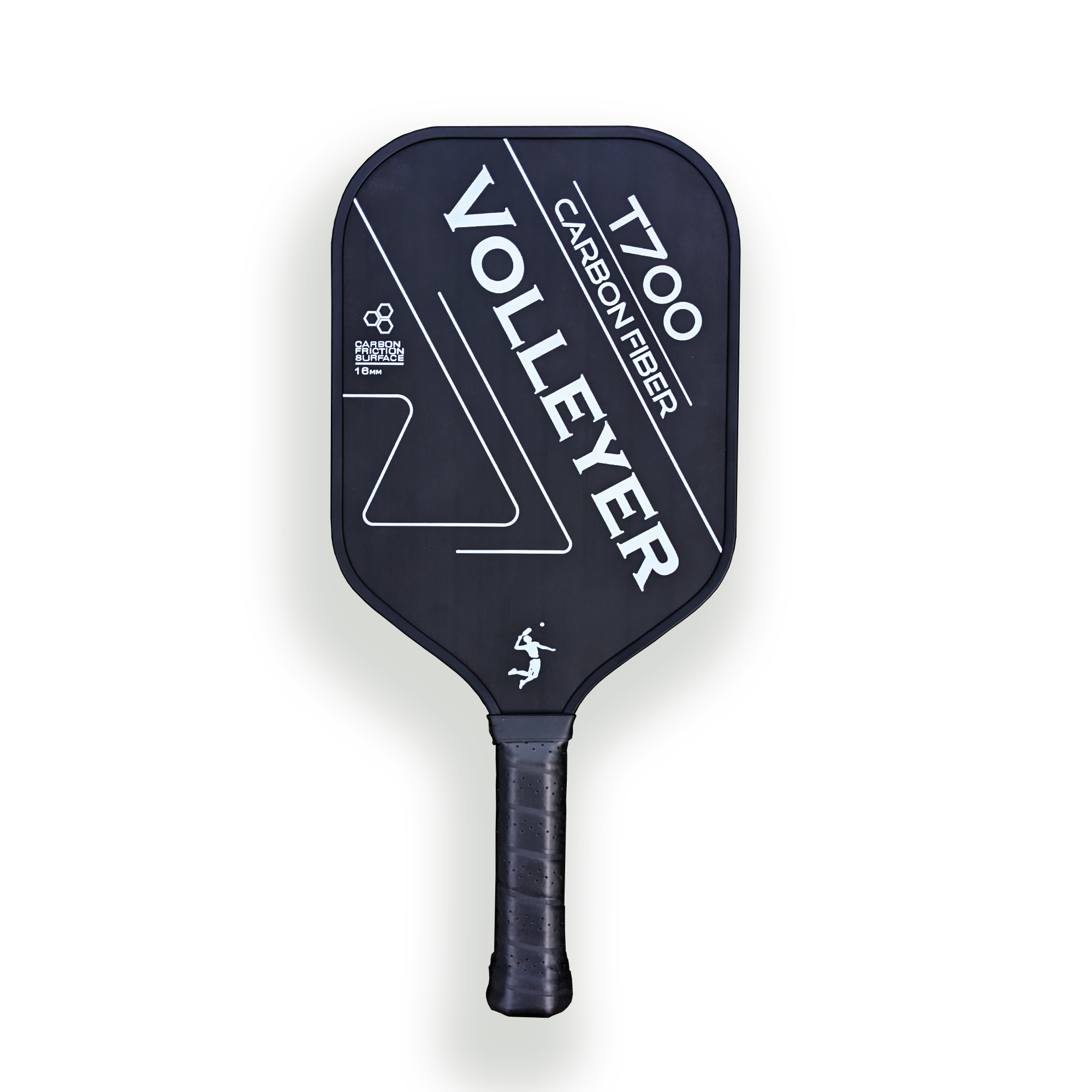
The Volleyer T700 is built with raw Japanese Toray carbon fibre, providing long-lasting grit. At 8.4oz, it offers stability for controlled slices and quick hands at the net. Priced at £64.79 (down from £107.98), it delivers premium spin performance at a mid-range cost.
For UK players looking to maximise training time, pairing quality drills with the right paddle makes all the difference.
Frequently Asked Questions
Do I need a partner to practise spin?
Not always. Wall drills and basket drills are excellent for solo practice.
Which spin should I focus on first?
Topspin serves and slices are the most practical for beginners. They improve consistency and make rallies harder for opponents.
Does grit wear out quickly?
Yes, especially on outdoor UK courts. Cleaning your paddle regularly extends performance. See our How to Add Grit guide for maintenance tips.
Conclusion
Spin transforms pickleball from a flat-hitting rally into a strategic battle of angles, pace, and control. By practising these ten drills consistently, you will improve your topspin drives, sharpen your slice returns, and add deceptive sidespin dinks to your game.
For UK players juggling indoor and outdoor conditions, drills that emphasise brushing, control, and repetition are key. Combine structured practice with the right paddle, such as the Volleyer T700 raw carbon fibre paddle, and you will not only generate more spin but also win more points.
Start small, practise often, and let spin become the weapon that takes your pickleball game to the next level.