The kitchen, officially known as the non-volley zone (NVZ), is the most unique and contested part of a pickleball court. Spanning 7 feet from the net on both sides, it dictates shot selection, positioning, and ultimately the pace of play. For UK players—whether competing in singles at a regional tournament in London or battling through doubles rallies at a Manchester leisure centre—understanding how kitchen rules and strategies shift between formats is essential.
This guide breaks down how kitchen play differs in singles vs doubles, offering UK-focused advice on footwork, resets, and dinking tactics. By the end, you’ll see why mastering the kitchen is key to levelling up, regardless of format.
Kitchen Basics Refresher
Before diving into strategies, let’s recap the fundamental kitchen rules that apply equally to singles and doubles:
- No volleys in the kitchen: Players cannot hit a volley (ball in the air) while standing in or touching the NVZ.
- Momentum counts: Even if you hit a legal volley outside the NVZ, if your momentum carries you in, it’s a fault.
- Dinks are king: Soft shots dropped into the kitchen neutralise power and force opponents to hit up, creating opportunities.
In singles, these rules influence precision and patience. In doubles, they form the foundation of teamwork and extended rallies.
Kitchen Strategies in Singles
Singles pickleball is fast-paced, physically demanding, and often unforgiving. With only one player per side, the kitchen becomes both a lifeline and a danger zone.
1. Controlling the Middle
In singles, the middle of the court is yours alone. Positioning just outside the kitchen line allows quick coverage of both sidelines. UK singles players often practise at indoor venues like Birmingham’s community centres, where tighter court spacing highlights the importance of efficient footwork.
Tactic: Stay slightly behind the NVZ line when preparing for your opponent’s shot. This gives a fraction more reaction time while still allowing you to step in for dinks.
2. Defensive Resets
Unlike doubles, where resets are often shared responsibilities, singles players must rely on their own consistency. When pressured with a hard drive, dropping the ball into the kitchen resets the rally.
UK tip: Practise reset shots in echoey sports halls, where faster indoor play exaggerates mistakes. A soft, high-arc reset that lands deep in the kitchen is often enough to regain balance.
3. Using Angles
In singles, forcing your opponent off-court is crucial. Dinking sharply cross-court into the kitchen stretches their movement and opens up space for a winning drive down the line.
Drill: Alternate dinking diagonally into the far corner, then aiming straight ahead. This builds accuracy and disguises intent.
Kitchen Strategies in Doubles
Doubles pickleball dominates UK clubs, with recreational and competitive play often revolving around the kitchen line. Unlike singles, doubles is a chess match of patience, angles, and teamwork.
1. The Dinking Battle
Extended dinking rallies define doubles play. Both pairs stand just outside the NVZ, testing each other’s control. The goal is not to win immediately but to force an error or create an opening for an aggressive finish.
Tactic: Keep dinks low over the net with minimal arc. High dinks give opponents attacking opportunities.
UK relevance: In doubles-heavy clubs like Pickleball London, social play often rewards consistency at the kitchen far more than power.
2. Partner Communication
Kitchen control in doubles is shared. Miscommunication—such as both players lunging for the same dink—leads to faults. Clear calls (“Mine,” “Yours,” “Switch”) are vital.
Tip for UK players: In noisy indoor halls, use short hand signals before the serve to clarify who covers middle dinks.
3. Poaching Opportunities
While singles players must defend the full court alone, doubles partners can poach at the kitchen line. A well-timed reach into the middle for a dink or volley can end the rally.
Drill: Practise poaching with your partner by setting up controlled cross-court dinks, then having the non-receiving player step in to finish.
Key Differences Between Singles and Doubles at the Kitchen
| Aspect | Singles | Doubles |
|---|---|---|
| Footwork | Constant movement to cover full width | Smaller, quicker adjustments |
| Resets | Defensive tool to slow rallies | Shared responsibility, often extended |
| Angles | Used to stretch opponent | Used to target gaps between partners |
| Teamwork | None, solo focus | Critical for avoiding miscommunication |
| Patience | Shorter exchanges | Longer dinking battles |
Common Mistakes in Singles Kitchen Play
- Rushing the net too early: Leads to getting passed down the line.
- Fix: Pause at the transition zone before advancing.
- Overhitting dinks: Singles requires more accuracy than power.
- Fix: Practise soft touches with a focus on arc, not speed.
- Ignoring stamina: Kitchen play in singles requires repeated sprints.
- Fix: Include footwork drills and fitness conditioning in training.
Common Mistakes in Doubles Kitchen Play
- Poor spacing with partner: Standing too close leaves gaps, while being too far opens the middle.
- Fix: Maintain 6–8 feet apart, moving as a unit.
- Failing to reset under pressure: Attempting a hard shot instead of dropping into the kitchen.
- Fix: Drill resets during practice games, especially on outdoor UK courts where wind exaggerates mistakes.
- Miscommunication: Silence leads to errors at the NVZ.
- Fix: Develop pre-set signals and keep verbal cues short.
UK-Specific Considerations
- Indoor vs Outdoor: UK indoor venues, like those in Cardiff leisure centres, often produce faster play, making controlled dinks critical. Outdoor courts in coastal cities like Brighton introduce wind, so resets must be higher and softer.
- Player Demographics: Many UK doubles players are retirees, relying on patience and positioning at the kitchen rather than explosive sprints. Younger singles players in competitive circuits lean on fitness and fast resets.
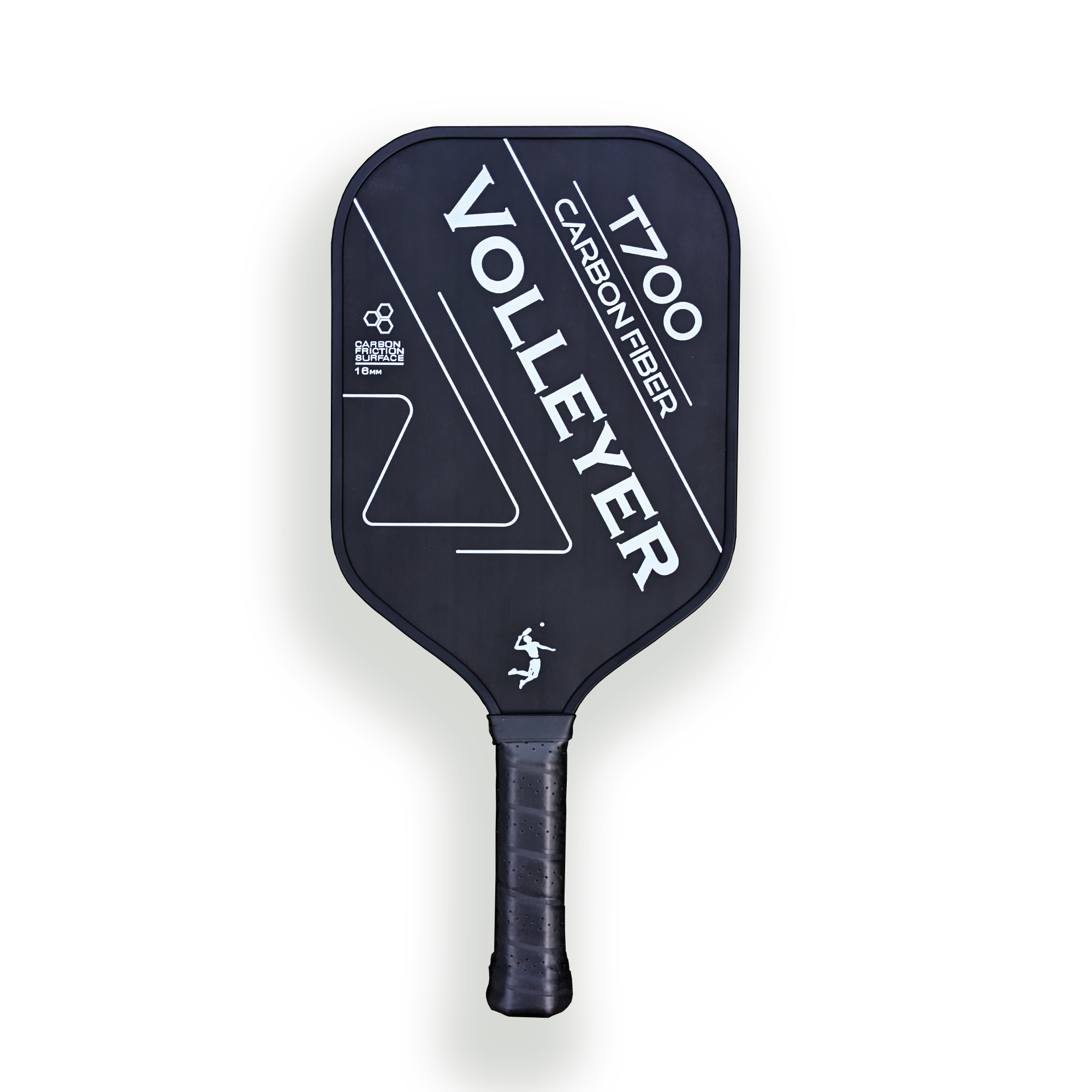
- Equipment: Carbon fibre paddles, such as the Volleyer T700, offer reliable grit for spin and control at the kitchen. Accessories like paddle erasers and lead tape further extend performance in demanding UK conditions.
Training Drills for Singles and Doubles Kitchen Play
- Wall Dinks: Practise solo by aiming soft dinks at a marked spot on a wall. Ideal for singles players.
- Triangle Dink Drill: Set up cones in a triangle near the NVZ and alternate targeting each. Perfect for doubles communication.
- Pressure Reset Drill: Have a partner drive balls at you while you practise dropping them into the kitchen. Works in both formats.
Conclusion
The kitchen may be the same size in singles and doubles, but the strategies it demands are very different. Singles emphasises stamina, defensive resets, and sharp angles. Doubles revolves around patience, communication, and teamwork in prolonged dinking battles.
For UK players, tailoring your kitchen tactics to the format you play most often—whether competing in singles tournaments in Edinburgh or enjoying social doubles in Manchester—will make the difference between scrambling and controlling the rally.
Next step: For more on kitchen positioning, see our guide Why Positioning Matters in the Kitchen.